What is an hôtel particulier?
In French, a hôtel particulier is a grand private townhouse, built between courtyard and garden. In Le Marais, once Place Royale (now Place des Vosges) had made the district fashionable, the aristocracy built dozens of them. Their courtyards are often open during the day: push the door, and you step into another century.
Hôtel de Sully
Built in the early 17th century for the financier Mesme Gallet, then bought by the Duke of Sully, Henri IV's minister, it has a beautiful courtyard and a garden. Its passage opens onto Place des Vosges, on the other side from rue Saint-Antoine.
Hôtel de Sens
One of the very few medieval mansions left in Paris, with turrets and a Gothic façade. It houses the Bibliothèque Forney, devoted to the decorative arts, and its garden is a hidden calm spot.
Hôtel Salé and Hôtel de Soubise
Hôtel Salé, now the Musée Picasso, owes its name to the salt tax (gabelle) that made its first owner rich. Hôtel de Soubise, with its huge courtyard, was rebuilt in the 18th century and houses the National Archives. See also our guide to the museums of Le Marais.
Opposite the hotel
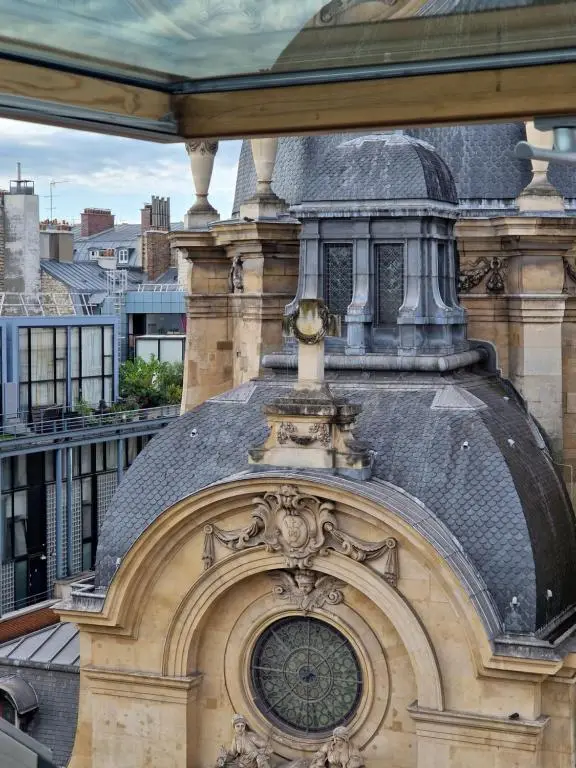
On rue Saint-Antoine itself, the dome of the Temple Sainte-Marie, a Protestant church built in the 1630s to plans by François Mansart, rises across from the hotel. From some of our rooms, it is part of the view.
Tip. Walk with your head up and doors ajar in mind: the best courtyards are hidden. Respect residents when courtyards are private. Opening hours and prices change: check each venue's official website before you go.
Frequently asked questions
Can I enter the courtyards of the Marais mansions?
Some courtyards are open to the public and some are not: look for open doors and respect the premises.